
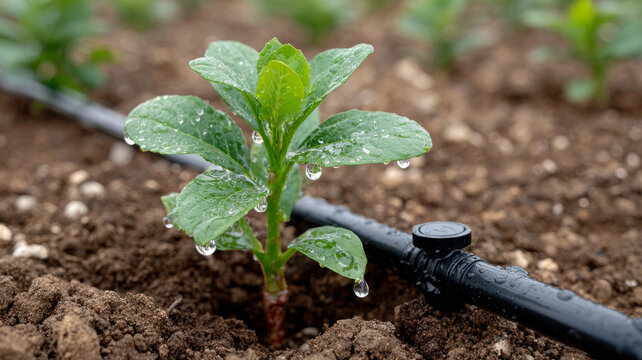
Drip irrigation is a highly efficient, water-saving method that delivers water directly to plant root zones through a network of valves, pipes, and emitters. Often called trickle irrigation, this system minimizes evaporation and runoff by slowly releasing water at low rates, potentially reducing water usage by 30-50% compared to traditional techniques
Key Aspects of Drip Irrigation:
- Methodology: Water is applied directly to the soil surface or below ground (subsurface) via emitters that drip at low pressure.
- Efficiency & Benefits: By targeting the roots, it reduces evaporation and weed growth, minimizes disease, and can increase crop yields by providing consistent moisture.
- Components: The system includes a control head (valves, filters), mainlines, and lateral lines with drippers.
- Application: Ideal for orchards, vineyards, and vegetable row crops (e.g., tomatoes, broccoli).
- Fertigation: It is frequently used for applying fertilizers directly to the root zone with the water
Drip irrigation is highly adaptable to uneven terrain, as the pipes can follow the contours of the land. It is widely used to save both water and labor costs, despite the high initial setup investment. Food and Agriculture Organization +1